
Key takeaways
- Use buyer evidence to move opportunities, rather than treating every conversation as progress.
- Separate expected deal value from collected revenue.
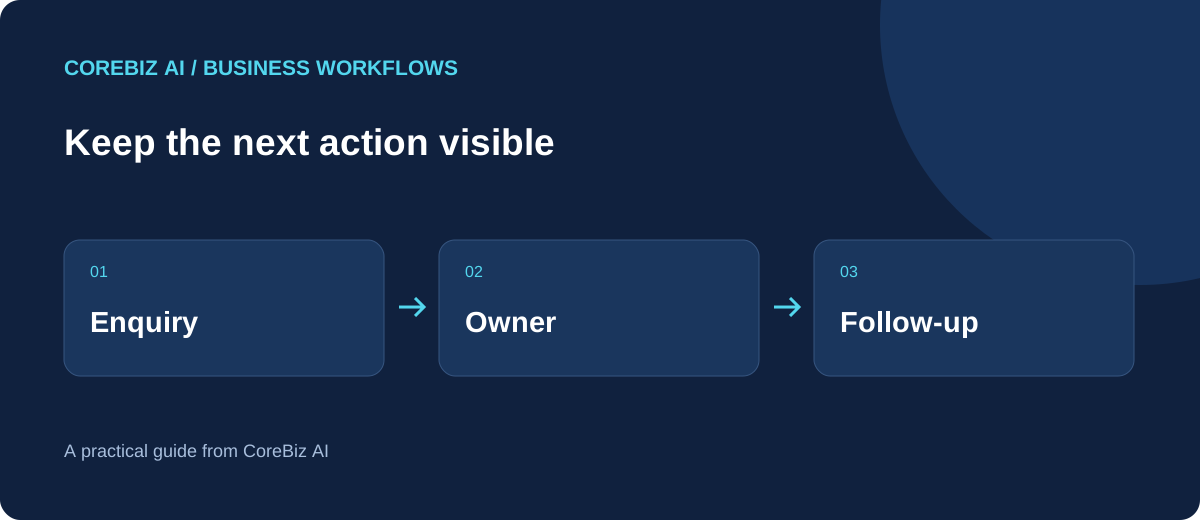
- Give every open opportunity a named owner and a dated next action.
A service-business pipeline works when each stage answers a practical question: what has the buyer actually agreed to, and what must happen next? Start there before choosing colours, adding automation or deciding which dashboard should appear on the first screen.
Consider a fictional design consultancy handling website enquiries, maintenance retainers and occasional branding work. Its owner does not need twenty stages. The team needs a shared way to distinguish a promising conversation from a scoped proposal and a confirmed commitment.
Define the decision behind each stage
A new enquiry means somebody has expressed interest. It does not mean the budget exists, the contact can approve a purchase or your team has understood the problem. Record enough context to arrange the next conversation without turning the initial form into an interview.
Qualification should establish whether the request fits your services and delivery capacity. Ask about the desired outcome, approximate timing and decision process. A buyer can be a good fit even when the budget is not final, provided the uncertainty remains visible.
A proposal stage means a specific scope has been shared with the buyer. Keep the document or reference nearby. Sending a generic brochure is useful communication, but it should not automatically make the opportunity appear ready for negotiation.
Negotiation begins when the buyer is discussing the actual terms. That might involve deliverables, payment milestones, support coverage or revisions. Use the stage because there is a real decision to resolve, not because the proposal has been waiting for several days.
Agree what counts as won
For the fictional consultancy, a verbal expression of enthusiasm is insufficient. The owner might define a win as an accepted written scope and an agreed commercial commitment. That policy should be documented, understandable and applied consistently across services.
Do not confuse a won opportunity with received money. A project can be commercially agreed while its invoice remains unpaid. Your sales view and your payment records answer different questions, and keeping them distinct prevents a dashboard from overstating cash availability.
Connect the workflow to a real workspace
The CoreBiz IT Services & CRM project shows how contacts, opportunities, quotations and follow-up tasks can sit in one workspace. Explore its project details to compare the available features with the process described here; the fictional examples in this article are not customer results.
Keep values honest and useful
Suppose a website package is estimated between forty thousand and sixty thousand rupees. Entering the larger figure as certain revenue creates misleading confidence. Use a defensible current estimate and record the assumptions, especially when integrations or content work have not been scoped.
For a recurring maintenance arrangement, decide whether the pipeline represents the initial month, the contract term or another clearly defined amount. Do not mix annual and monthly values without a visible convention. A smaller consistent number is more useful than an impressive but ambiguous total.
Review old estimates after a meaningful scope change. If the buyer removes a feature, update the opportunity instead of leaving the earlier value behind. Preserve the commercial explanation in notes so the next colleague can understand why the amount changed.
Separate forecasts from commitments
A forecast is a planning view, not a promise. A qualified enquiry and a late-stage negotiation can both appear in an open pipeline, but they should not be described as equally likely income. If your current app does not calculate probabilities, make the distinction in your review process.
Avoid inventing a probability because a dashboard looks incomplete. Start with observed stage movement and clear reasons for loss. You can build a more formal forecasting model later, after the team has enough consistent history to explain its assumptions.
Make the next action visible
An opportunity without a next action is often just a saved conversation. Give it a concrete step: confirm the hosting requirements, send the revised scope, schedule a stakeholder call or ask whether the proposed start date still works. Avoid vague entries such as follow up soon.
Set a due date and identify the person responsible. A small team can still lose ownership when several colleagues receive the same message. The record should make the handoff obvious without requiring someone to search an inbox for the latest reply.
When a customer is waiting on information from you, the action belongs to your team. When you need the customer to supply material, record exactly what is missing. Those two situations require different messages and should not receive the same automated reminder.
Run a short weekly pipeline review
Review the exceptions first. Look for opportunities without owners, actions that are overdue and proposals whose assumptions have changed. This makes the meeting useful even when the total number of opportunities has barely moved since the previous week.
For each stale record, decide whether to advance, clarify, defer or close it. Closing a genuinely inactive opportunity is a housekeeping decision, not an admission of failure. Keeping it open indefinitely makes the pipeline less reliable for everyone using it.
Discuss one lost opportunity in enough detail to learn something. Perhaps the timing was wrong, the service was a poor fit or the proposal left an important question unanswered. A simple reason with context is better than blaming every loss on price.
A practical review checklist
Ask whether the current stage has supporting evidence. Then ask whether the value still reflects the latest scope, whether the next action has a responsible person and whether the due date is realistic. Finish by recording the decision while the conversation is fresh.
Keep the meeting focused on actions rather than reading every field aloud. The CRM should hold the background. Human discussion is most valuable when interpreting uncertainty, resolving ownership and deciding where a conversation needs more care.
Frequently asked questions
How many stages should a small team use?
Use the fewest stages that distinguish meaningful buyer decisions. Six familiar stages can be enough when their definitions are clear. Add another stage only if it changes what somebody does, who owns the work or what evidence is required before proceeding.
Should every new contact become an opportunity?
No. A supplier, networking contact or existing customer asking a routine question does not necessarily represent new sales work. Create an opportunity when there is a specific potential purchase to manage, and link it to the relevant contact instead of duplicating personal information.
Can AI decide when a deal is won?
AI may help summarise a conversation when the relevant tool is configured, but a commercial stage change needs an accountable decision. A draft summary can misread conditional language. Review the source message and follow the business definition before treating a commitment as confirmed.
Conclusion
Write a one-page stage guide before adding more pipeline complexity. Define the evidence for each stage, the value convention and the minimum next-action information. Apply the guide to several fictional opportunities first so the team can discuss ambiguities without affecting customer records.
Then keep the weekly review short and consistent. A useful pipeline does not need to look busy. It needs to show what is known, what remains uncertain and what your team will do next.
- Stage evidence: record the buyer action that supports the current stage.
- Current value: use the latest agreed scope and a consistent amount convention.
- Next action: name the responsible person and choose a realistic due date.
Continue with a related workflow
Use the next article when you are ready to work through the adjacent decision. Keep the practical process connected instead of adding another tool without deciding how people will use it.
Prepared with AI assistance. Examples are fictional and illustrate planning decisions, not measured customer results. Review product configuration before relying on provider-dependent features.
Discuss a focused implementation
Explore the service scope and share the process you want to improve.
Explore this service