
Key takeaways
- Give AI real evidence about your contribution instead of asking it to make you sound experienced.
- Check every qualification, tool and result before using a generated draft.
- A short, specific application is more useful than a generic paragraph full of unsupported claims.
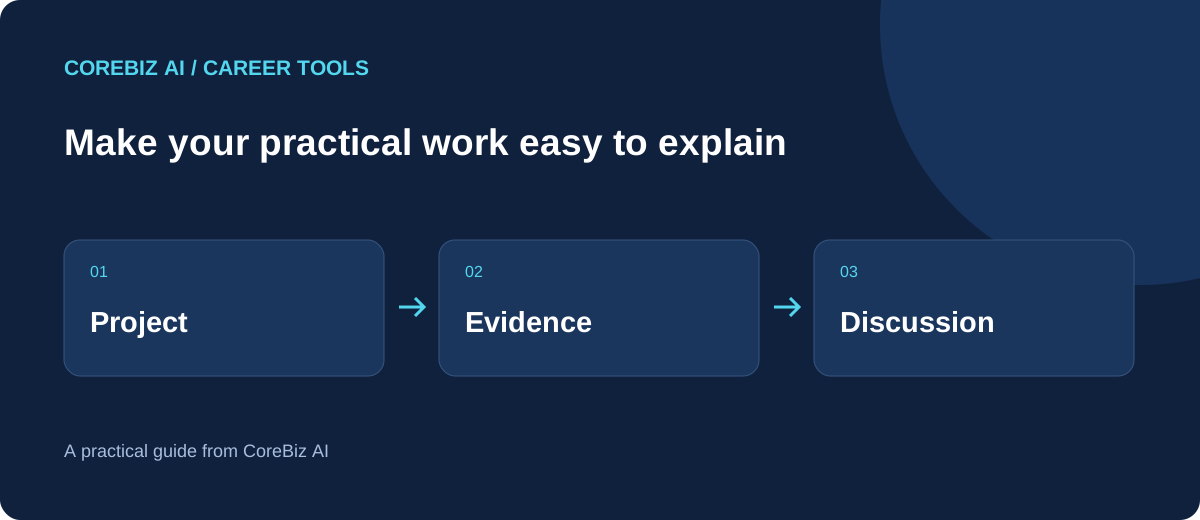
An AI application coach is most useful when it helps explain what you have actually done. Give it a clear project brief, relevant skills and a few factual examples. Do not ask it to create experience you cannot discuss or to turn a target role into employment history.
A student applying for a small spreadsheet project might have completed a college assignment rather than paid client work. That is still useful evidence when described honestly. The application can explain the task, the tools used and the student's own contribution without pretending the assignment was a commercial contract.
Start with the employer's actual request
Read the deliverables and identify the skills that matter most. If the brief asks for cleaning a spreadsheet and documenting the changes, focus on those responsibilities. A long introduction about unrelated interests can make it harder for the reader to assess whether you understand the work.
Note any questions that need clarification before you can estimate the effort. The amount of data, the required output format and the deadline may all affect your answer. A good application can acknowledge an uncertainty without sounding unprepared or promising a result based on missing information.
Do not copy the entire listing into a claim about yourself. The employer's desired skills are requirements to compare with your background, not facts about your ability. AI can blur that distinction when asked to make an application sound perfectly matched.
Choose two or three relevant examples
Select evidence that supports the work being requested. A college exercise, personal project, volunteer task or previous assignment can all be relevant. Explain the context clearly so the reader understands whether you worked alone, contributed one part or followed a guided lesson.
Describe your contribution in concrete terms. Cleaned duplicate rows, built a responsive page or edited captions for a student event gives the reviewer something to discuss. Broad phrases such as passionate problem solver are less helpful unless the application also contains evidence of the work.
Connect the workflow to a real workspace
SkillSpring combines opportunity discovery with student and employer workspaces. Its project details explain the growth tools, verification requirements and temporary demo boundaries. Recommendations and AI drafts do not establish employer identity, promise work or replace your own judgement.
Prepare factual notes before generating a draft
Write the facts in plain language before opening the AI tool. Include the tools you used, the task you completed and any result you can support. If you do not know a measured outcome, describe what was produced rather than inventing a percentage improvement.
Keep your availability realistic. State the hours you can offer and any exam commitments that affect the proposed schedule. Do not ask AI to make you appear available at all times simply because the listing says that fast responses would be preferred.
Decide what information is appropriate to send to the provider. Career notes and a project brief may be sufficient. Avoid unnecessary personal details, private client material or another person's documents. Read the consent information so you know which profile fields and notes are included.
Leave unsupported facts out
If you have not used a particular framework, do not list it as an existing skill. You can explain that you are learning it or ask whether another tool would be acceptable, provided that statement is accurate.
A small honest gap is easier to discuss than a false claim exposed later.
The same rule applies to language proficiency, certifications and client names. A model may produce plausible details because they often appear in similar applications. Plausible is not the same as true, and the applicant remains responsible for reviewing what is submitted.
Review the draft against your evidence
Read every sentence and ask what supports it. If a sentence claims experience, identify the actual project. If it mentions an outcome, confirm where the number came from. If it promises a deadline, check the work estimate and your study schedule before leaving it in the draft.
Watch for changes in certainty. Familiar with Excel is not the same as advanced financial modelling expertise. Helped with a student event is not the same as leading an organisation's marketing strategy. Small wording changes can significantly alter the impression of your background.
Keep the parts that improve clarity and remove the parts that inflate claims. You do not need to accept the generated text as a finished answer. Treat it as an editable draft and rewrite any sentence that you would not naturally say in an interview or project discussion.
Keep the application short and useful
Open by showing that you understand the requested output. Then give a relevant example, explain your availability and ask the most important unanswered question. That structure helps the reader decide whether the next conversation is worth having without searching through several paragraphs of general enthusiasm.
Include a portfolio link only when it supports the application and you have permission to share the material. Explain what the reader should look at. A collection of unrelated links creates work for the reviewer and may expose personal or client information that was not intended for this audience.
Avoid promising that you are the best candidate or guaranteeing a business outcome. A student project application should demonstrate fit and reliability, not make claims that cannot be established before the work begins. Clear boundaries can strengthen the conversation rather than weaken it.
A fictional application outline
For a fictional spreadsheet task, an applicant could explain that they used formulas and duplicate checks in a college dataset, describe the output they produced and offer to review a sample of the employer's format. The application should label that college context instead of implying previous paid delivery.
The applicant might then state weekend availability and ask about the number of rows and required file structure. Those details create a practical next step. There is no need to add invented customer results or a claim of several years of professional experience.
Learn from the response without overreading it
An employer may ask a technical question, request another example or explain that the timing does not fit. Use that response to understand the next decision. A rejection does not prove your whole profile is weak, just as a positive reply does not establish that every term is acceptable.
Keep a private record of which examples were useful and which questions appeared repeatedly. That can guide a small learning project or a portfolio improvement. The goal is to become better at explaining your work, rather than generating a larger number of nearly identical applications.
Frequently asked questions
Is using AI dishonest?
Using a writing tool to improve clarity is different from submitting false facts. Review the draft, follow any application-specific rules and keep your experience accurate. If a process asks for unaided writing, respect that condition rather than treating a tool as permission to ignore it.
What if I have no paid experience?
Use relevant coursework, personal projects or volunteer work and label the context honestly. Explain your contribution and what you learned to do. An entry-level opportunity should be assessed against appropriate evidence, not against a fictional work history created to make the application look more senior.
Will an AI-written application guarantee a reply?
No. Responses depend on the opportunity, timing, competition and the employer's process, among other factors. The tool can help organise supported facts, but it cannot guarantee selection or compensate for a mismatch between the requested work and your actual skills or availability.
Conclusion
Prepare factual notes, generate a draft only with informed consent and review each claim against your real work. Keep the final application specific to the opportunity and short enough to make the next conversation easier. Save the polished wording as a reference, not as a substitute for understanding it.
An honest application gives you something you can confidently explain. That is a stronger foundation for a first project than impressive language that creates expectations you cannot fulfil.
- Evidence: connect every experience claim to work you actually completed.
- Accuracy: remove invented metrics, qualifications and customer names.
- Fit: state realistic availability and ask about important missing details.
Continue with a related workflow
Use the next article when you are ready to work through the adjacent decision. Keep the practical process connected instead of adding another tool without deciding how people will use it.
Prepared with AI assistance. Examples are fictional and illustrate planning decisions, not measured customer results. Review product configuration before relying on provider-dependent features.
Discuss a focused implementation
Explore the service scope and share the process you want to improve.
Explore this service