
Read it as a stranger would
You know the project, college event or internship behind each line of your resume. A recruiter does not. Read the document without that background and ask what is actually clear. Can someone find your contact details, qualification, relevant skills and project evidence quickly? Start by improving those basics before worrying about a score from any resume tool.
Describe the work you personally did
For a college project, explain the problem, your contribution and how you checked the result. Built a reporting page using sample data is more informative than worked on an innovative solution. If it was a group project, make your role clear. Do not invent users, revenue or percentage improvements to make a small project sound larger. Specific, honest work gives an interviewer something meaningful to discuss.
Use the job description as a relevance check
Look for responsibilities you can support with examples. Move relevant experience into view and explain unfamiliar project names in ordinary language. Do not copy a list of tools you cannot use just because the role mentions them. Where a skill is still developing, describe the practice you have completed and what you could demonstrate. Relevance is useful; a resume full of unsupported keywords is difficult to defend.
Use automated feedback as a second opinion
CoreBiz links to a public AI Resume Checker project for reviewing a resume. Its feedback should support your own review, not promise selection or replace a recruiter. Check the current access and daily limits on the application. Before sharing your document anywhere, review which personal details it contains. Finish by reading the exported file and opening it on another screen to check formatting and broken links.
A before-and-after project bullet
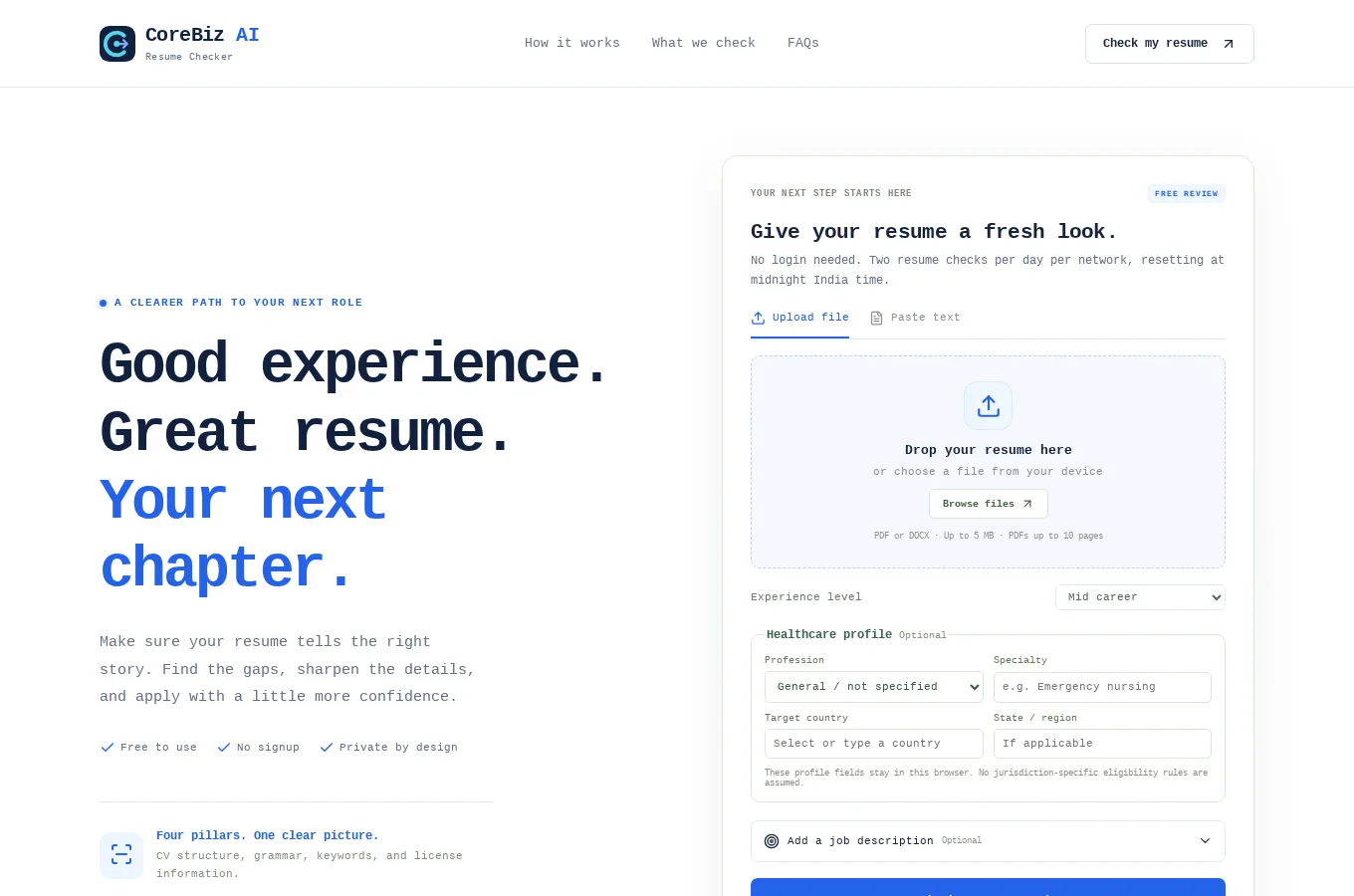
These are fictional examples, not an invitation to claim work you did not do. Use the Resume Checker as an extra review, then confirm the wording against your actual contribution. The public screen below shows the upload controls and access limit without exposing a resume.
- Vague draft: worked on a college website using modern technology.
- Clearer example: built the event-registration form, added required-field checks and tested duplicate entries using fictional student records.
- Interview check: can you explain one bug you found, how you investigated it and what you would change next?
Review the resume as evidence for a conversation
Decide what the first reader needs to find
A first-job resume should make your qualification, relevant skills and practical work easy to locate. Read it from top to bottom without relying on the background you already know. If a project title uses an internal college nickname, add a plain explanation. Make contact details readable and check that portfolio links open. Avoid adding sensitive personal information simply because an old template contains a field for it. The right content depends on the role and application requirements. Start with what helps the reader understand your preparation rather than trying to fill every empty corner of the page.
Explain your contribution without inflating the project
Use a short description of the problem, your own work and the way you checked it. A fictional example could be a student event form where you implemented required-field checks and handled duplicate entries using sample records. That tells an interviewer what to ask about. A claim that you revolutionized event management says much less unless you can support it. If the work followed a tutorial or used an existing library, explain what you adapted. Being specific about your contribution gives you a stronger interview discussion than borrowing the scale or results of a team effort you did not personally deliver.
Use the role description to choose evidence
Read the responsibilities and identify examples you can demonstrate honestly. For a reporting role, a small project involving clear data definitions may deserve more space than an unrelated event activity. For a support role, an example of explaining a problem clearly may be useful. Do not turn the resume into a copied list of every tool mentioned in the vacancy. If your experience is introductory, say what you practised and what you can show. A relevant, defensible example is more useful than an impressive-looking list that becomes difficult to discuss when the interviewer asks how you used it.
Check the exported document and its feedback
Use a tool review as a prompt to inspect the evidence
Automated feedback can highlight structure or wording that deserves another look. Treat it as a second opinion and compare each suggestion with your actual work. Do not add an achievement or skill simply to satisfy a score. Open the final exported file on another screen and check line breaks, readability and working links. The CoreBiz Resume Checker public interface shows its input options and daily access limit; no resume was submitted to make the screenshot in this guide. Keep your own document private unless you understand the tool and the sharing purpose. A review should help you explain your experience more clearly, not make promises about selection.
Frequently asked questions
What if I have no internship experience?
Use coursework, personal practice or group projects that you can explain honestly. Make your role and the result clear, and distinguish a working demonstration from a deployed product. A small example with a thoughtful explanation gives an interviewer something concrete to evaluate.
Does a high resume score guarantee an interview?
No. Hiring depends on the role, evidence, applicant pool and employer process. Use feedback to find issues you can inspect and improve. Focus on accurate content and readable presentation rather than treating a tool score as an employer decision.
A fictional final review before sending an application
Imagine applying for an entry-level support role with a college helpdesk project. Your draft says handled customer issues efficiently, but the project used fictional tickets and had no actual customers. A clearer description would explain that you categorized sample requests, wrote response templates and tested how unresolved items were escalated. This presents useful preparation without borrowing experience you do not have. The interviewer can now ask how you chose the categories and what happened when a request did not fit.
Before sending the application, compare the resume, portfolio description and live demo. They should describe the same project scope and your same contribution. Check that any linked document does not expose credentials or classmates information. Ask a friend to read the exported file and explain what they think you built. Their interpretation is a useful check on whether the wording is clear. Automated feedback can suggest another pass, but the final responsibility is to keep the application truthful, readable and aligned with work you can discuss confidently.
- Replace unsupported claims with the task you actually completed.
- Check consistency across resume and portfolio.
- Open the final file and links before submitting.
Explore related CoreBiz AI resources
The links below connect this guide to the relevant CoreBiz service and project. Check the project page for its current features and access requirements before using the live tool.
Prepared with AI assistance. Business and learning scenarios are illustrative; no customer results, hiring outcomes or performance guarantees are implied.
Discuss a focused implementation
Explore the service scope and share the process you want to improve.
Explore this service